Monday, March 31, 2014

Green the Prairie!

Fellow Horticulturists! 

We have an amazing opportunity for anyone who wished to volunteer at Sheldon Lake State Park!
Here is a little history on Sheldon Lake taken from the Texas Parks and Wildlife website:


"Sheldon Lake State Park & Environmental Learning Center is a 2,800-acre outdoor education and recreation facility located in northeast Harris County...

Sheldon Reservoir, located on Carpenter's Bayou, a tributary of Buffalo Bayou, was constructed in 1942 by the federal government to provide water for war industries along the Houston Ship Channel. Texas Parks and Wildlife acquired the reservoir in 1952 and designated it as the Sheldon Wildlife Management Area; it was opened in 1955. Sheldon Lake was designated a state park in 1984.
Formerly in a rural area, Sheldon Lake has survived a tremendous influx of urbanization over the past 50 years as Houston has grown. Sheldon Lake is now a green and blue oasis for wildlife and people on the edge of Texas' largest city. "

Volunteers are needed to plant native coastal prairie grasses. This event will continue the restoration of 400 acres of farmland to native prairie habitat and re-establish the diverse wildlife that it once had. 

If you are interested, please sign up!

Sign up here if you want to volunteer! Please sign up by April 2nd!!!

https://docs.google.com/forms/d/1Ua3CDs0-GbvcY-xpYw_vRWDhh-Xh0ulV-bqQN50hzdw/viewform


Photo Credit: http://popawalker-steve.blogspot.com/2010/08/sheldon-lake-state-park.html
Photo Credit: http://www.tpwd.state.tx.us/newsletters/state_parks_getaways/2008vacation/dyk.phtml

Friday, March 28, 2014

Plant of the Month - Native Series


White Prickly Poppy

The white prickly poppy, Argemone albiflora, is the most abundant of the prickly poppies in Texas but it is also found in Northern Arkansas and Southern Missouri. You may be familiar with this flower because they are frequently seen along roadsides and railroad tracks. This plant grows to be 2 – 4 feet in height with flowers that are 3 – 4 in. in diameter. This flower blooms from April to June, allowing fellow plant enthusiasts to enjoy during the warmer months – but be careful; these plants tend to be very spiny!

The white prickly poppy has many uses – some dating to the native inhabitants of the Americas. The Aztecs would use the plant during sacrificial rituals while the Comanche used the sap to treat skin conditions. In nature, they are a great source of food for quail and dove due to the high, dependable, amount of seeds each plant produces.

If you want to grow the prickly poppy in your garden, some negligence is needed. This plant will not thrive in rich soil that is fertilized and watered frequently. The proper conditions for the poppy include dry, well-drained soil with a sunny to partially sunny location.

Info and Photo Credit: Native Plant Society of Texas - http://npsot.org/wp/story/2011/1936/

Info: Wildflowers of Houston & Southeast Texas By John and Gloria Tveten  Pg.75-76

Photo Credit: Wild about Texas Photography by Nancy Kissiar http://wildabouttexas.blogspot.com/2012/03/springtime-in-texas-and-prickly-poppies.html

Friday, March 21, 2014

Micronutrient & macronutrient deficiencies and their symptoms

The list below shows the nutrients most plants need and their symptoms if the nutrient is deficient.

Micronutrients- Cofactors that aid essential cell mechanisms that are
needed in small amounts.

  • Boron - terminal growths die/thickened/curled/wilting/reduced flowering
  • Chlorine - wilting/yellow-green/leaf bronzing; poor growth/marginal leaf necrosis
  • Copper - stunted growth/leaf tips die; reduced growth
  • Iron - yellow-green/reduced growth; low stunted growth/purple/poor fruit development
  • Manganese - yellow-green of leaves/similar to iron; low stunted growth/purple/poor fruit development
  • Molybdenum - stunted/reduced yield/cupping/rolling
  • Zinc - leaf tip necrosis; interveinal yellow foliage/induces iron and zinc 

Macronutrients- Involved in photosynthesis and protein synthesis that are used heavily and need to be replaced.
  • Nitrogen - slow stunted growth/yellow-brown; heavy growth/dark green/delayed maturity/low fruit yield
  • Phosphorus - slow stunted growth/purple/poor fruit development; yellow-green/short stems
  • Potassium - slow growth/weak stalks/small fruit; light green
  • Calcium - shortened growth of shoots; E: interferes with micronutrients
  • Magnesium - curled up leaves/yellowing in christmas tree pattern; interferes with Calcium uptake
  • Sulfur - reduced growth/delayed maturity/light green-yellow


Wednesday, February 26, 2014

Greenroof Work Day!

Hello, fellow plant lovers!

On February the 25th we had our first green roof workday and it was a HUGE SUCCESS. We managed to cut down all of the beds in just 45 minutes!

For those who do not know, we are managing the Green Roof and it is located right by the Architecture building. We are planning on seeding it with Texas native plants this Thursday (2/27/2014).


Monday, February 17, 2014

Mutualism in Bluebonnets

I found some bluebonnets growing on campus last week and decided to plant one in a container in the greenhouse. As I was repotting it, I noticed that this particular specimen had a few nodules in its root system. 

Note the three nodules indicated by the arrows
These nodules contain Rhizobium bacteria, which can "fix" nitrogen from the gaseous form in the atmosphere to the mineral form that is usable by plants. This is a prime example of mutualism in nature - the plants gain access to the nitrogen from the bacteria, and the bacteria have a safe place to live in the bluebonnet's root system. Of course, bluebonnets don't always form nodules; sometimes, gardeners have to introduce the bacteria via inoculants.

Friday, February 7, 2014

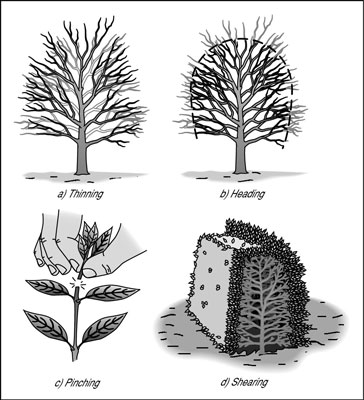
How to Prune Your Plant

Ever wonder how people get their plants to appear so perfect? There’s a trick to it – pruning. Pruning is basically training your plant to grow the way you want it to. Its goal is to improve plant health, appearance, and restrict certain growth.

If you let a plant grow uninterrupted, it will usually grow straight up with little branching, resulting in a tall, lanky, weak and unsupported plant that will easily fall over. However, you can prune it to change this or encourage this.

To do it you will need something sharp, such as a knife, scissors, or shears. The idea is to make a smooth, clean cut, at a 45ยบ angle. This allows the plant to heal quickly.

If you want to promote side growth, then prune the topmost new growth. You can cut the leaves or pinch them with your fingers. This will encourage the plant to send out side branches, resulting in a more uniform and bushy plant. If you want your plant to grow more vertically, prune the side growth by pinching them or cutting them off entirely.


If you have a perennial plant, you will probably have to cut it back entirely before or after the growing season. That way, it will have new, strong growth later on. With flowers, you need to remove dead flowers to promote growth of new flowers. The same applies to fruiting plants – once the fruits appear and ripen, you should cut them off so that the plant will know to produce more fruit. Pruning also prevents plants from outgrowing their containers too rapidly.

Pruning can be done at anytime but the recommended time varies with the plants. Pruning at the wrong time will not kill the plant but it may weaken the plant. The best time for most plants (there are exceptions) is during late winter or early spring. Since pruning stimulates new growth, if you prune right before winter arrives, the new shoots may die due to the cold.


Sources:

Tuesday, January 21, 2014

Plant of the Month


Greetings! 

This month’s Plant of The Month is the beautiful Hellebore. This perennial flowering plant is native to Europe, spanning from Great Britain and ending in the Caucasus region. This evergreen is valued among horticulturist for its resistance to frost and its early spring flowering.


To establish the Hellebore, do not forget to water regularly until the roots are settled in. Once this occurs, minimum watering and light is required. These plants fare best in partial shade.

To keep the Hellebore healthy, make sure the soil is well drained and slightly fertilized with organic matter. Fallen leaves work very well for this purpose.

Too keep the flowering plant looking pristine, prune back the dead foliage during the spring season.

For more information on Hellebore care, check out these websites!

http://www.helleborus.us/GardenCare.html

http://www.whiteflowerfarm.com/growing-hellebores.html.